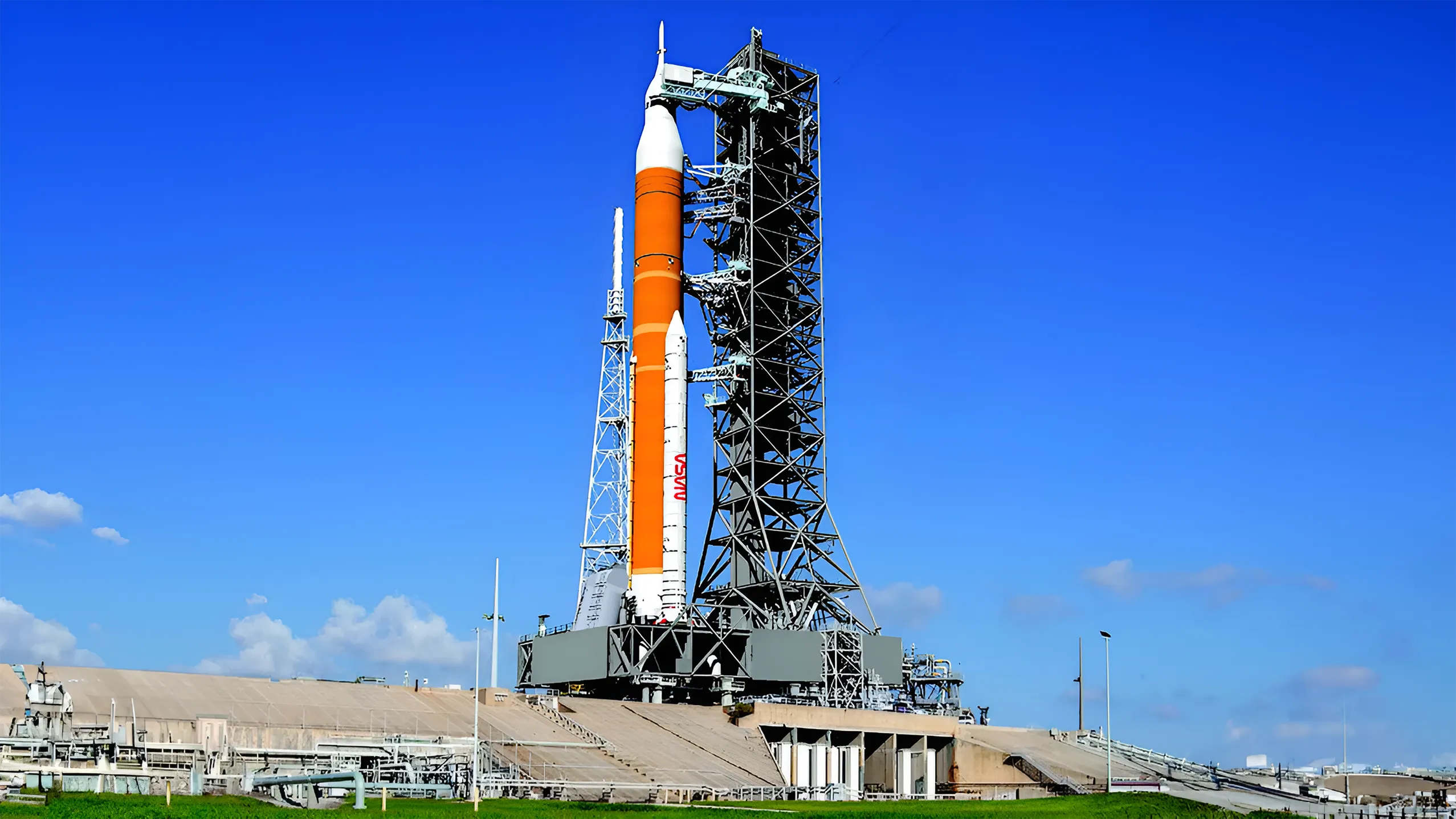
NASA Mobile Launcher 2 (ML2)
Mobile Launcher 2 (ML2) is a highly complex aerospace infrastructure system designed to enable the assembly & launch of the National Aeronautics and Space Administration’s (NASA) Space Launch System rocket configurations and Orion spacecraft from Kennedy Space Center on Merritt Island, FL, USA.
The purpose-built ML2 structure is a towering 377+ foot infrastructure marvel that supports the assembly, transport, and launch of the Space Launch System (SLS) rocket and Orion spacecraft for the NASA Artemis program.
Owner: NASA
Structural Engineer: Bechtel Corporation
General Contractor: Bechtel Corporation
Steel Fabricator: Paxton & Vierling Steel Co.
Fabricated Connection Engineer: CSD Structural Engineers
Steel Detailer: Dowco Consultants A DeSimone Company
Casting Design Engineer & Manufacturer: CAST CONNEX
Share:


.png)

.webp)
.webp)
Designed to endure the extreme conditions of a SLS rocket launch – including temperatures exceeding 2,200 degrees Fahrenheit (1,200 degrees Celsius), blast pressures over 130 pounds per square inch (900 kilopascals), and more than 8.9 million pounds (40 meganewtons) of thrust – ML2 represents one of the most complex and demanding structural engineering challenges in modern aerospace history.
To meet these challenges, Bechtel Corporation and Paxton & Vierling Steel selected CAST CONNEX custom steel castings as the backbone of ML2’s structural connections. These cast steel components – nodes and flange fittings – were engineered to deliver unmatched performance in strength, stiffness, and constructability, while minimizing weight and simplifying both shop fabrication and field assembly.
Modular Construction
A Smarter, Safer Approach
ML2 was constructed using a modular construction strategy that allowed different sections of the tower to be built and outfitted in parallel. This approach improved safety by reducing the need for high-elevation work and streamlined the overall schedule by enabling simultaneous fabrication and assembly. Once completed, the modules were transported to the project site and stacked to form the final launch tower.
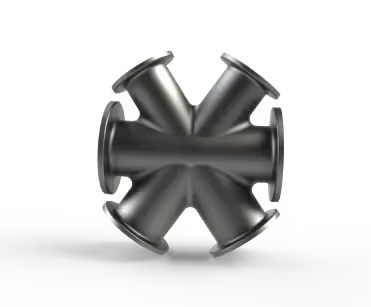
CAST CONNEX custom cast steel nodes were instrumental in enabling modular construction of the launch tower. The “corner nodes”, with precision-machined bolted connections, formed the primary module-to-module structural interface that ensured seamless alignment and fit-up of the modules and facilitated rapid and reliable field assembly.
Why Cast Steel Nodes?
Performance Meets Precision
.png)
CAST CONNEX custom cast steel nodes replaced intricate T-Y-K welds with precision-machined bolted and butt-welded connections, dramatically improving fabrication tolerances and eliminating weld distortion at ML2’s most critical joints. The cast nodes enabled:
- Simplified fabrication and rapid erection with integral module-to-module bolted connections at the nodes for precise alignment
- Connection tonnage reduction that was critical for ML2’s mobility
- Elevated stiffness and strength of the connections that withstand launch-induced, gravity, and hurricane loads
- Precision fit-up of modules through CNC-machined flange fittings and end plates of the custom cast steel nodes
Tower-Wide Integration: Enabling Fabrication, Transport, and Assembly
The ML2 launch tower is comprised of three primary segments:
Base - interfaces with NASA’s crawler-transporter and manages flame deflection
Tower Chair - an asymmetric pyramidal space truss that supports the modules
Modules - seven stacked rectangular units forming the upper tower
CAST CONNEX custom cast steel nodes were fundamental to the structural design and construction of each segment. And the custom solution for each segment supported every construction phase, from shop fabrication to final field erection.
Our custom cast steel flange fittings ensured high dimensional accuracy and reliable bolt alignment in the field, while eliminating the cupping distortion and lamellar tearing risks associated with conventionally fabricated end plate connections. Custom cast steel nodes were deployed throughout the Chair and Module segments of the tower, including:
- Twenty cast steel nodes in the Chair that connected to pipe members, circular hollow structural shapes (HSS), and wide-flange beams
- Eight corner nodes and four X-nodes in each of the seven Modules that facilitated the ground assembly and sequential module stacking
Together, the cast steel nodes and flange fittings enabled the creation of large, shop-fabricated steel assemblies that were welded and assembled off-site with high precision. These assemblies were then transported to the construction sites and field-connected using bolted end-plate connections, streamlining the erection process and improving overall construction efficiency.
Advanced Engineering and Manufacturing
CAST CONNEX custom cast steel solutions for ML2 were engineered to meet the highest standards of structural performance, precision, and reliability. Each casting was custom-designed using a combination of traditional code-based calculations and advanced finite element analysis (FEA), ensuring optimal strength and stiffness under complex multi-axial loading conditions.
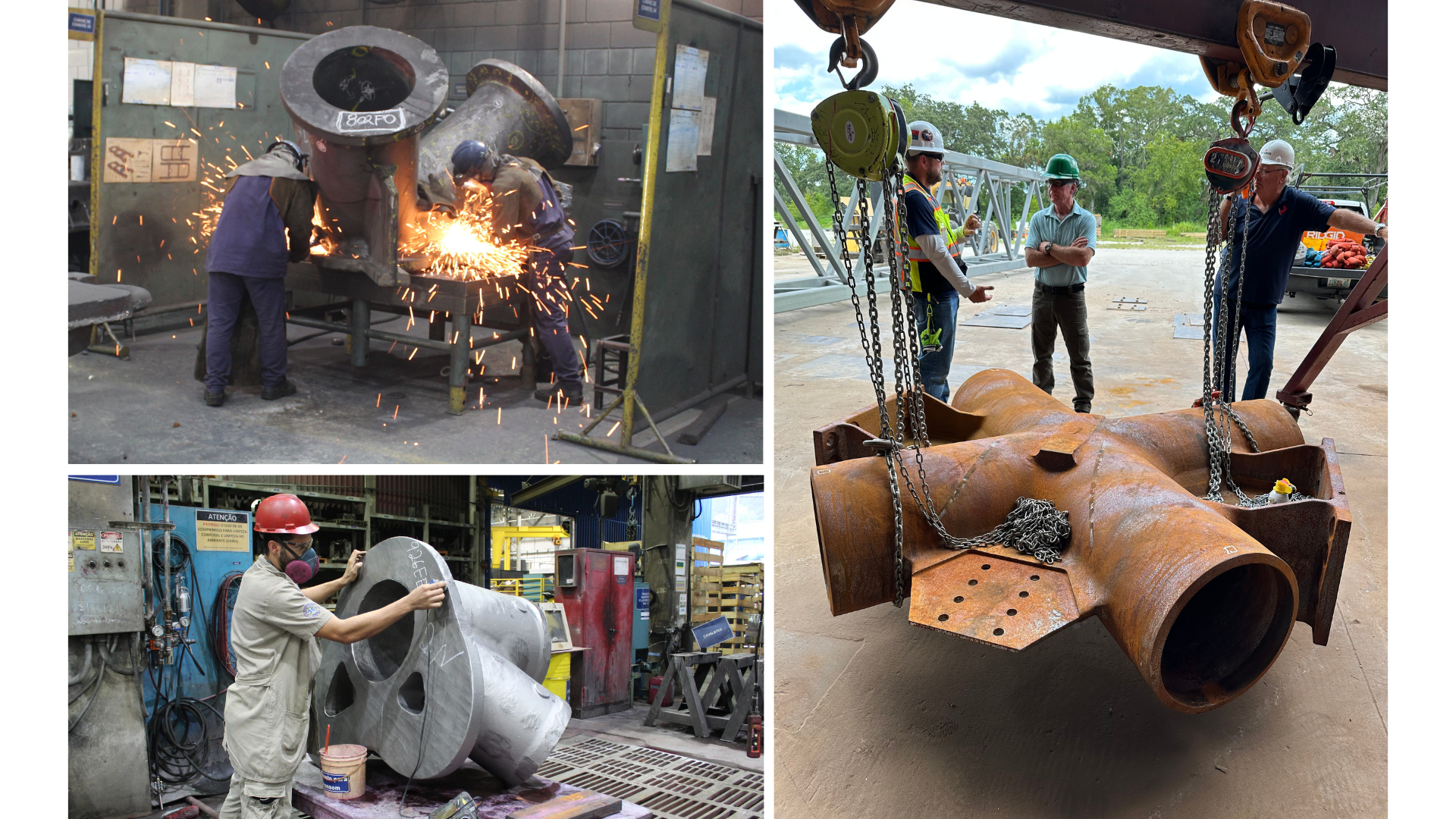
The custom steel castings were produced with exceptional dimensional accuracy and quality, enabling tight tolerances at critical connection points. This precision was essential for both welded and bolted interfaces that minimized fit-up issues and ensured consistent performance across all structural assemblies.
Rigorous quality assurance protocols, including destructive and non-destructive testing, validated the mechanical properties and integrity of each casting, confirming their readiness for use in one of the most demanding structural environments in aerospace infrastructure.
A Legacy of Innovation
CAST CONNEX is proud to have contributed to one of the most iconic and ambitious engineering projects of our time. Our custom cast steel solutions not only met the rigorous demands of NASA’s ML2 but also exemplify how precision casting technology can solve complex geometric and structural challenges efficiently, economically, and reliably.
.webp)
.webp)
.webp)
.webp)
Products Used On the Project